USC Stem Cell scientists are advancing our understanding of how the body develops, maintains and repairs the kidney and urinary system. They are also developing new regenerative treatments for patients with kidney injury and disease, bladder disorders, and urinary incontinence.

Building a Synthetic Kidney

Each year, approximately 100,000 patients in the U.S. are in need of a kidney transplant, yet only about 20,000 donor organs are available. To help close this gap, a team of scientists led by Zhongwei Li is working to build a synthetic kidney grown from human stem cells. These stem cells will follow early developmental processes similar to normal embryonic kidney development, and then complete their maturation inside of the recipient’s own body.

Kidney Cells for Therapeutics

Scientists in the lab of Nils Lindström have identified key molecular switches that generate distinct cell types within the kidney’s filtering units, known as nephrons. The lab is getting closer to being able to generate therapeutic kidney cells on demand for patients who need them by understanding how these cells normally develop and begin to function.

Kidney Researchers

Kidney News

Thymus

Thymus-derived hormone may help suppress age-related inflammation

In animal models, researchers from the Keck School of Medicine of USC found that targeting the thymus can reduce age-related inflammation and improve cancer outcomes. Chronic, low-grade inflammation in the body—a phenomenon …

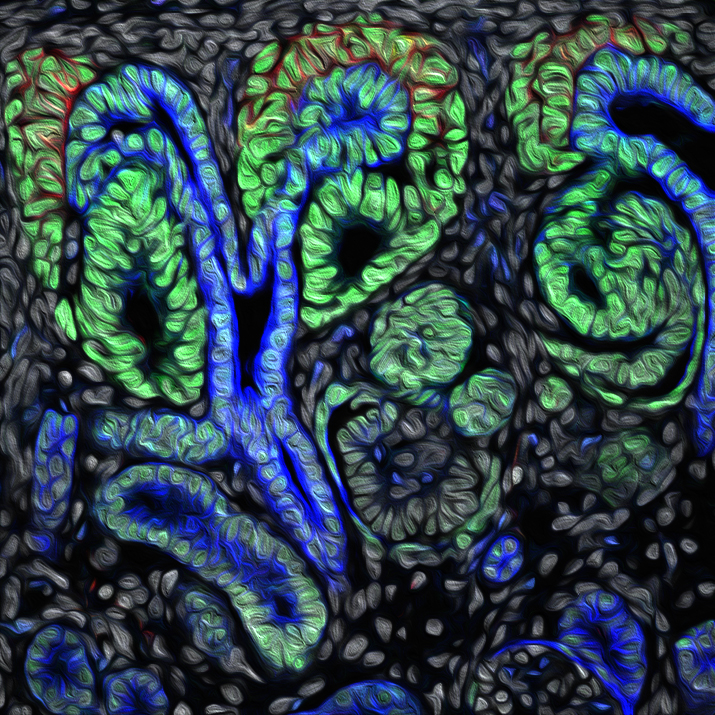
Lab-grown kidney organoid (Image courtesy of the Lindström Lab)

USC Stem Cell scientists engineer “synthetic organizer” cells to improve kidney organoids

Mapping the human kidney, researchers discovered an unrecognized developmental axis and engineered “synthetic organizer” cells to recreate key developmental signals, producing improved, reproducible lab-grown organoids for studying disease and therapies. In a …

Kidney model (Image by Midjourney)

Tiny particles in urine could be the key to treating a deadly childhood kidney disease

USC Viterbi researchers have discovered that a naturally occurring nanoparticle found in urine shows early promise as a treatment, and potentially a prenatal intervention, for a rare disease that kills newborns and …

All Kidney News

Kidney Videos

Dr. Nils Lindström's lab studies the molecular mechanisms that control how progenitors that exist during development differentiate into the broad range of cell types that underpin adult organ function. The lab integrates single-cell omic approaches with new microscopy and computational tools to understand how genetic changes cause abnormal differentiation in the kidney and model these genetic changes in the renal stem-cell derived organoid with the aim of identifying new treatments for kidney disease.
All Kidney Videos