Skip to content

Menu
  • USC Stem Cell
  • About
    • Stem Cell FAQs
    • Mission and History
    • California’s Leadership in Stem Cell Research
    • Founding Supporters and Ambassadors
    • Well-being
    • Jobs
  • News & Events
    • News
    • Events
    • Videos
    • Impact Reports and Newsletters
  • Research
    • Department Faculty
    • Eli and Edythe Broad Center Faculty
    • Research Facilities
    • Clinical Translation
    • USC+CHLA Alpha Clinic
    • Translational Research Committee
    • USC Stem Cell Research Oversight Committee (SCRO)
  • Education & Training
    • Undergraduate
    • Master’s Program
    • PhD Program
    • Medical Education
    • Postdoctoral Opportunities
    • Our Trainees
  • Funding
  • Inclusive Excellence
  • Support Us
  • Contact
    • Directory
    • Subscribe
  • Search

Stem cells found in gum tissue can fight inflammatory disease

By  Beth Newcomb

Posted August 5, 2013
Reading Time 2 minutes

in this section

  • News
  • Events
  • Videos
  • Impact Reports and Newsletters

read this next

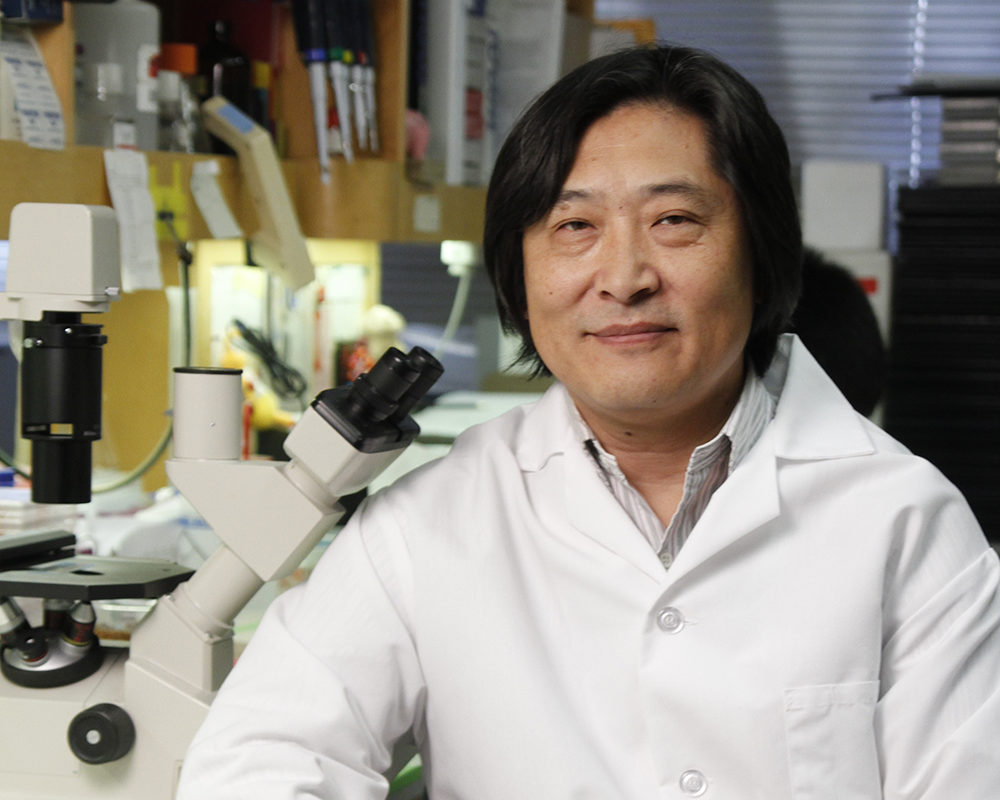
Songtao Shi, DDS, PhD (Photo courtesy of the Ostrow School of Dentistry of USC)

New method to treat chemo-related jaw bone necrosis

  • Follow us on
Songtao Shi, DDS, PhD (Photo courtesy of the Ostrow School of Dentistry of USC)

Stem cells found in mouth tissue can not only become other types of cells but can also relieve inflammatory disease, according to a new Ostrow School of Dentistry of USC study in the Journal of Dental Research.

The cells featured in the study are gingival mesenchymal stem cells (GMSC), which are found in the gingiva, or gum tissue, within the mouth. GMSC, like other stem cells, have the ability to develop into different types of cells as well as affect the immune system.

“Gingiva is very unique in our body,” says Professor Songtao Shi, the study’s senior author. “It has much less inflammatory reaction and heals much faster when compared to skin.”

Previously, the developmental origins and abilities of GMSC hadn’t been fully illustrated. This study shows that there are two types of GMSC: those that arise from the mesoderm layer of cells during embryonic development (M-GMSC) and those that come from cranial neural crest cells (N-GMSC). The cranial neural crest cells develop into many important structures of the head and face, and 90 percent of the gingival stem cells were found to be N-GMSC.

The two types of stem cells vary dramatically in their abilities. N-GMSC were not only easier to change into other types of cells, including neural and cartilage-producing cells; they also had much more of a healing effect on inflammatory disease than their counterparts. When the N-GMSC were transplanted into mice with dextrate sulfate sodium-induced colitis – an inflamed condition of the colon – the inflammation was significantly reduced.

The study indicates that the stem cells in the gingiva – obtained via a simple biopsy of the gums – may have important medical applications in the future.

“We will further work on dissecting the details of the gingiva stem cells, especially their notable immunoregulatory property,” says first author Xingtian Xu, specialized lab technician at the Ostrow School of Dentistry Center for Craniofacial Molecular Biology.

“Through the study of this unique oral tissue, we want to shed the light on the translational applications for improving skin wound healing and reducing scar formation.”

“Gingivae Contain Neural-crest- and Mesoderm-derived Mesenchymal Stem Cells” appeared online on July 18 in the Journal of Dental Research and was funded by the National Institute of Dental and Craniofacial Research.

Read more about: Musculoskeletal

Post navigation

← 2013 EiHS & CIRM STAR Colloquium and Poster Presentation
A genetic catch-22 promotes and prevents liver cancer →
Keck School of Medicine of USC
1975 Zonal Ave.
Los Angeles, CA 90033
Google Map
Phone: (323) 442-1900
Hours:
Monday–Friday
7:30am–5:00pm PST
Resources For
  • Current Students
  • Faculty & Staff
  • Patients
  • Community
  • Press
  • Visitors
Areas of Focus
  • Education & Training
  • Research
  • Patient Care
  • Community
Departments and Offices
  • Departments
  • Institutes and Centers
  • Research Programs
  • Administrative Offices
About Keck
  • History
  • Leadership
  • Annual Report
  • Digital Accessibility
Intranet
  • Privacy Notice
  • Notice of Non-Discrimination
  • Smoke-Free Policy

Copyright © 2026 University of Southern California

  • Research
    • Research HomeCutting-edge research drives innovation in healthcare at the Keck School of Medicine
    • Where Research Happens
    • Research Funding
    • Training and Education
    • Researcher Resources
    • Collaborate and Partner
  • Education
    • Education HomeNurturing future healthcare leaders through excellence in education
    • MD Program
    • Residencies and Clinical Fellowships
    • PhD Programs
    • Master’s Programs
    • Professional Programs
    • Post-Doctoral Researchers
    • CME, Certificate & Undergraduate Programs
  • Departments, Institutes & Centers
    • Basic Science and Clinical DepartmentsExploring foundational science and specialized clinical fields
    • Institutes and Centers
    • Research Programs
  • About
    • About the Keck SchoolDiscover the mission, history, and vision of the Keck School of Medicine
    • History
    • Leadership
    • Dean’s Corner
    • Life in Southern California
    • Visit
  • Our Faculty
  • Current Students
  • Newsroom
  • Events Calendar
  • Support the Keck School
  • USC.edu
  • Are you a Patient?