Qi-Long Ying’s lab is working to generate a renewable source of immune cells that can be engineered to attack cancer and infections. His team has already made progress in cultivating progenitor cells that give rise to two key types of immune cells: macrophages and granulocytes. In collaboration with Rong Lu’s Lab, the Ying Lab is exploring ways to encourage granulocyte/macrophage progenitors (GMPs) to self-renew. They are testing whether these GMPs can develop into fully functional macrophages—which form the body’s first line of defense by engulfing and digesting invading bacteria and viruses, as well as cancers. They are also genetically modifying these GMPs to empower them to more aggressively attack cancer cells.

USC Stem Cell scientists are advancing our understanding of cancers of the lung, prostate, blood, colon, skin, pancreas, liver, brain, ovaries and eye. They are also using stem cells to find new regenerative therapies and drugs to treat cancer, one of the leading causes of death worldwide.

Cancer Researchers

Cancer News

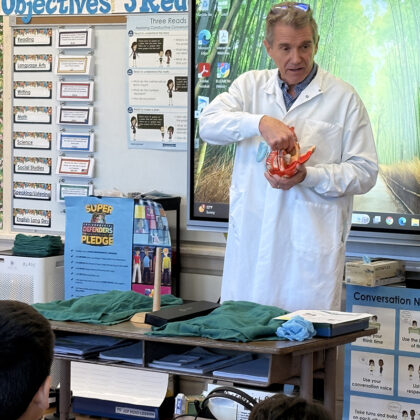
Chuck Murry in the third-grade class at Vermont Avenue Elementary School (Photo by DJ Kast)

USC Stem Cell’s Chuck Murry shows heart for local third-graders through the medical and cancer STEM programs

USC’s Medical STEM Program brings pig hearts, pulse oximeters, and a world of possibility to local third graders. At Vermont Avenue Elementary School, a class of third graders stared wide-eyed as Chuck …

Biomedical engineers at USC Viterbi are using ultrasound to trick tumor cells into effectively painting a target on their own backs, enabling more powerful treatments. Image/ChatGPT.

Tricking tumors into marking themselves for destruction

New research from the USC Viterbi School of Engineering harnesses focused ultrasound to reprogram solid tumors, making them more effective targets for immune cells. USC biomedical engineers have found a way to …

Cancer associated cells identified by the rare event detector in patients with breast cancer, image courtesy of the Oberai and Kuhn research groups at USC.

Researchers invent new AI tool to automate detection of cancer in blood samples

Innovation detects cancer cells in blood samples (liquid biopsies) in as little as 10 minutes and identifies hard-to-find cells without humans in-the-loop. When cancer spreads, tiny amounts of cells can break away …

All Cancer News

Cancer Videos

Dr. Rong Lu’s lab studies stem cell coordination, regulation and malfunction from a single cell perspective. If you’re interested in studying stem cells or cancer at the single cell level, please email your CV to Dr. Rong Lu at ronglu@usc.edu. For more information, visit https://ronglulab.usc.edu.
All Cancer Videos