
New research from the USC Viterbi School of Engineering harnesses focused ultrasound to reprogram solid tumors, making them more effective targets for immune cells.
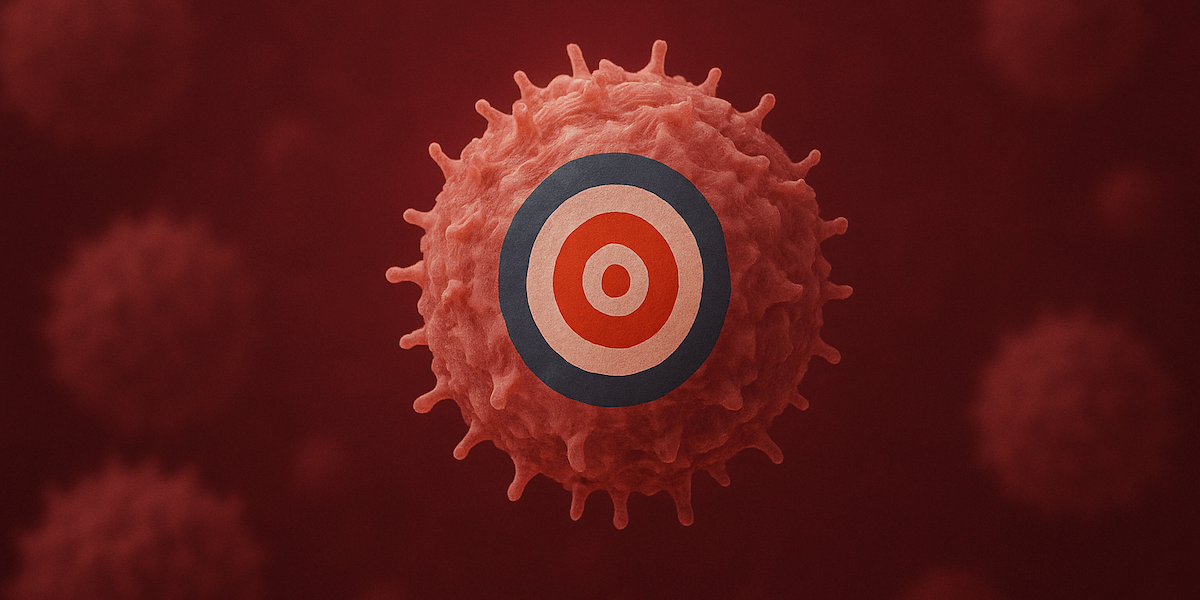
USC biomedical engineers have found a way to make a solid tumor paint a target on its own back in order to train the body’s immune system to find and destroy it.
The research team from USC Viterbi’s Wang Lab used focused ultrasound waves to “prime” tumor cells so they can be more easily recognized and attacked by chimeric antigen receptor (CAR) T-cells, the engineered immune cells that have revolutionized treatment for blood cancers but have until now struggled against solid tumors. The research has been published in Nature Materials.
CAR T-cell therapy works remarkably well in the bloodstream, where rogue cancer cells are exposed and easily targeted. However, solid tumors are another story. They hide deep in tissue, shielded by a microenvironment fortress of healthy cells. Every tumor is different, making it hard to find a single “flag” that marks cancer cells without causing damage to healthy ones.
The Wang Lab team found a creative way around this biological camouflage. By using focused ultrasound (FUS)—the same gentle sound waves used in medical imaging—they discovered they could mechanically prompt cancer cells to express a specific protein on their surface.
That protein, known as CD19, acts as a bullseye for CAR T-cells, which are designed to hunt down and kill any cell displaying it. Once the CAR T-cells are activated, they don’t stop there—they also go after the neighboring cancer cells within the tumor region.
A Tumor That Trains Its Own Killers
“When you’re trying to kill a tumor, it’s a complicated task. Think of it like you’re digging a tunnel into a mountain,” said Peter Yingxiao Wang, the Dwight C. and Hildagarde E. Baum Chair in Biomedical Engineering at USC. “It’s much better if you dig the tunnel from both sides instead of only a single side. We could keep engineering the T-cells to make them more potent. But if we don’t touch the other side, the tumor cells, it’s much less effective.”
The research team engineered a genetic circuit inside cancer cells that responds to two signals: ultrasound-induced mechanical stress and a safe antibiotic drug called doxycycline, which has had a history of applications in cancer therapies. The result is a dual-key safety mechanism the researchers call an “AND-logic” gate.
“Doxycycline is already well established in synthetic biology,” said Chi Woo (Nate) Yoon, the study’s first author and assistant research scientist in the Wang Lab. “We’re using that well-known system in a new way. The drug acts as a safety switch to open the treatment window, and ultrasound then boosts gene activation exactly where and when we want it.”
When both signals are present, the circuit activates a gene that causes the tumor cell to express the “priming antigen” CD19, which locally activates CAR T-cells. As a result, a handful of tumor cells become training centers, helping activate and guide CAR T-cells to target nearby cancer cells in the treated region.
Once activated, those T-cells move through the tumor, killing not only the CD19-marked cells but also neighboring cancer cells that express the secondary tumor-specific antigen.
“The CAR T-cells will not cause toxicity outside of the tumor region, because the training will be happening locally,” Wang said. “Therefore, even if there is normal tissue or organs outside of the tumor site that are expressing a similar antigen, they wouldn’t be attacked because the training will not happen there. The training will be guided by the ultrasound only at the tumor site.”
Longwei Liu, assistant professor of ophthalmology and biomedical engineering at USC, said that the concept of harnessing tumor cells as a “training center” was something the Wang Lab had been striving to achieve for many years.
“The training center idea really goes back to the original idea from Peter a long time ago,” Liu said. “Peter said, ‘Can we turn the tables around? Can we engineer tumor cells to train the T-cells to target them? Can we get tumor cells to release a ‘kill me’ signal and train the T-cells?’”
The approach proved effective, even when only 10-15% of tumor cells expressed the training marker, with these cells successfully activating CAR T-cells to attack the broader tumor
Remote-Controlled Immunotherapy to Transform Tumor Treatments
What makes the approach so powerful is its precision. The ultrasound waves can be focused deep within the body without surgery or needles, activating the gene circuit only in the tumor’s exact location.
Tests in cell cultures, tumor organoids and mice showed that the ultrasound priming was safe, non-invasive, and incredibly precise, producing a localized immune response without damaging surrounding tissue.
While the study focused on prostate cancer models, the team also demonstrated the platform’s versatility across breast cancer and glioblastoma cells.
“We want to show the broad applicability of this system in different tumor models,” Yoon said. “The same technique or platform can be applied for different tumors for different applications.”
Yoon said that a key advantage of the work was the advancement in the field of “sono-mechanogenetics,” where ultrasound is harnessed to provoke changes in cell behavior.
“It really opens up a lot of future applications using ultrasound as an energy-based modality to control cells within the body,” he said. “The second advantage is this training center idea. Now we have T-cells and tumor cells on both sides that we can engineer to reach really high levels of selectivity and efficacy in therapy,” Yoon said.
The latest Wang Lab research represents a significant step toward making CAR T-cell therapy safer and more effective for solid tumors, potentially expanding the powerful treatment beyond blood cancers to a much wider range of malignancies.