Growing nerve cells in the gut
The human body has what is sometimes called a “second brain” in the digestive tract. The enteric nervous system (ENS) performs many vital functions, including coordinating the movement of food to allow …

Fasting plus vitamin C proves effective for hard-to-treat cancers
Scientists from USC and the IFOM Cancer Institute in Milan have found that a fasting-mimicking diet could be more effective at treating some types of cancer when combined with vitamin C. In multiple …
The Broad Foundation brings together stem cell scientists, engineers and physicians at USC and beyond
Developing new stem cell therapies requires more than a solo biologist having a eureka moment alone in the lab. Real progress relies on collaborations between biologists, engineers and physicians. That’s why The …

What and when we eat affects our immune system. Here’s how.
Professor Valter Longo, director of the USC Longevity Institute, is investigating how fasting and diets that mimic fasting’s effects can help immune function, including vaccine efficacy and the body’s response to infection …
Design redundancy is in our DNA
Design redundancy is not only an invention of engineers for building machines, but also a principle of nature for designing organisms. This principle is at play in the regulation of the genes responsible for directing stem cells to multiply themselves in the developing mouse embryo, as described in a new study in Science Advances.
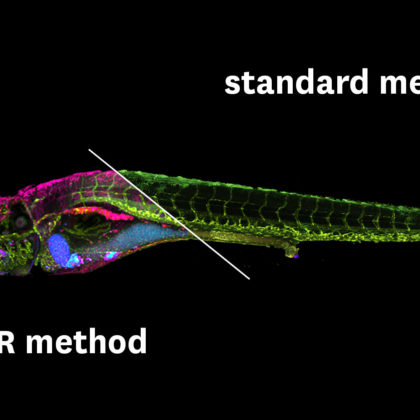
From detecting lung cancer to spotting counterfeit money, this new imaging technology could have countless uses
USC scientists have developed a new tool to peer more deeply and clearly into living things, a visual advantage that saves time and helps advance medical cures. It’s the sort of foundational …

USC finds new routes to industry engagement and funding
Story courtesy of In-Part Over the last year, Dr. Qing Liu-Michael, Program Director at USC Stem Cell and the Eli and Edythe Broad Center for Regenerative Medicine and Stem Cell Research at …
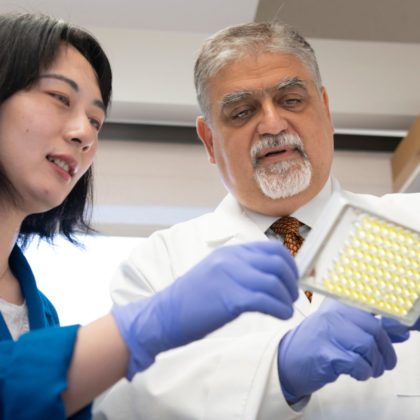
Breakthrough in testosterone-producing cells could lead to treatment for “low T”
USC researchers have successfully grown human, testosterone-producing cells in the lab, paving the way to someday treat low testosterone with personalized replacement cells. In Monday’s Proceedings of the National Academy of Sciences, scientists …

$10 million gift from Broad Foundation advances USC stem cell research on aging-associated disease
USC’s groundbreaking stem cell research and training programs have received a major boost thanks to a $10 million gift from the Eli and Edythe Broad Foundation. The donation is part of the …
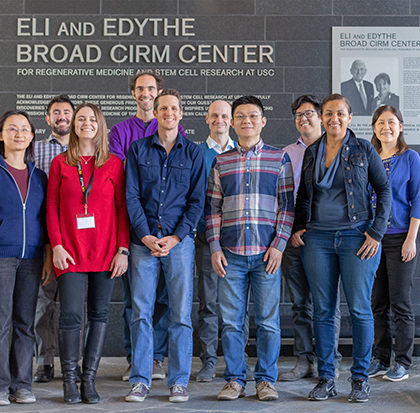
USC Stem Cell junior faculty balance babies with biomedical research
Growing stem cells isn’t just something junior faculty do in the lab. Eight of the junior faculty in the Department of Stem Cell Biology and Regenerative Medicine recently welcomed new babies into …
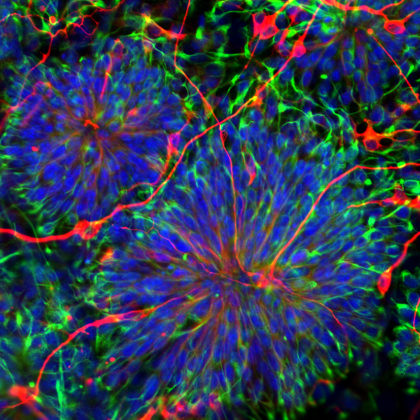
From restoring sight to reversing brain damage, USC stem cell researchers are making life-changing discoveries
If anyone has a clear vision of the power of stem cell cures, it’s Anna Kuehl. She suffered a retina-wrecking disease that cost her much of her sight before USC physicians surgically …

Tissue engineering: The big picture on growing small intestines
Babies born prematurely often face intense medical challenges, including intestines that are underdeveloped or diseased. While an intestine transplant can benefit some patients, many babies are simply too small to endure this …

This tiny fish could unlock mysteries about growing old
Back in its native habitat, the African turquoise killifish wiggles from its egg, eats, spawns and dies — all within a few months. Life goes by fast when your home is a …

Eat less, live longer? The science of fasting and longevity
When it comes to what, when and how we eat, fasting — voluntarily abstaining from food for varying periods of time — is having a moment. It was the most popular diet …
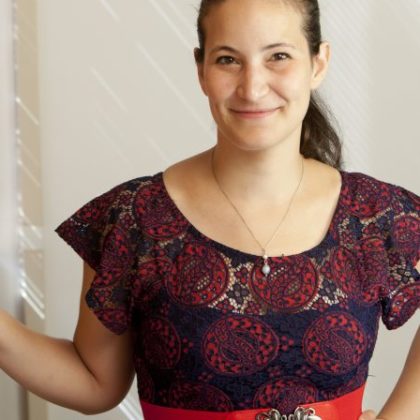
Bérénice Benayoun honored for genetics research
The Genetics Society of America (GSA) and the Gruber Foundation have awarded Assistant Professor Bérénice Benayoun the 2019 Rosalind Franklin Young Investigator Award for her research in genetics. The award, intended to …
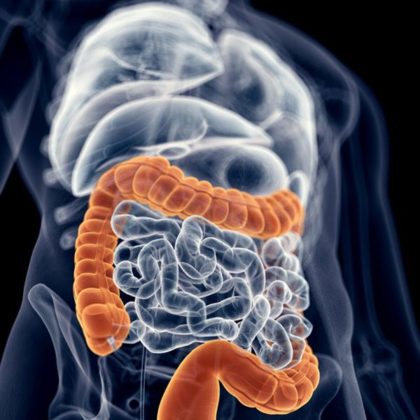
Fasting-mimicking diet holds promise for treating people with inflammatory bowel disease, USC study finds
What if a special diet could reduce inflammation and repair your gut? USC researchers provided evidence that a low-calorie “fasting-mimicking” diet has the potential to do just that. Published in the March …

Tracy Grikscheit: engineering new organs from living cells
Article courtesy of CHLA.org Tracy Grikscheit, MD, is a fixer. In the operating room at Children’s Hospital Los Angeles, she specializes in helping babies born with severe bowel dysfunction. She’s one of …

National Cancer Institute award to support research on colorectal cancer at USC
A grant from the National Cancer Institute will advance researchers from the USC Viterbi School of Engineering and the Keck School of Medicine of USC in their fight against colorectal cancer. Stacey …

USC Stem Cell acquires two instruments to advance state-of-the-art cell sorting
When it comes to sorting cells or other small particles, there’s no better place to do so than USC. The university’s Flow Cytometry Facility recently acquired two top-of-the-line cell sorters, the BD …

Disease risk seen in disrupted biological clock
USC scientists report that a novel time-keeping mechanism within liver cells that helps sustain key organ tasks can contribute to diseases when its natural rhythm is disrupted.