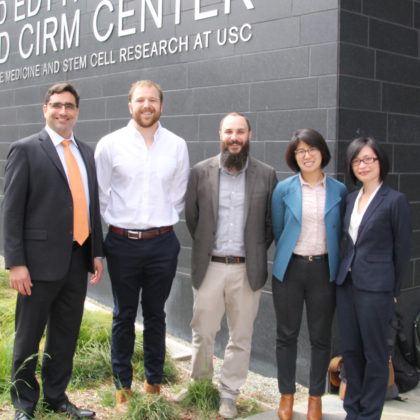
At USC’s Junior Faculty Mini-Symposium, stem cell scientists build to understand
When physicist Richard Feynman died in 1988, he left a message scrawled across his chalkboard: “What I cannot create, I do not understand.” Twenty years later, scientists in a very different field …
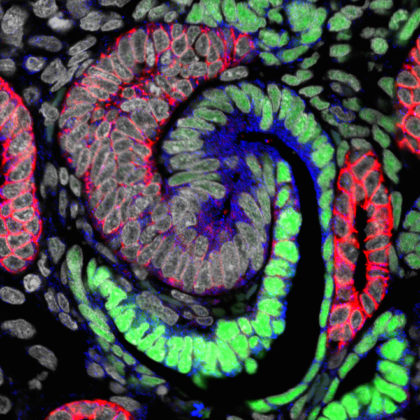
Never accept a kidney donation from a mouse
Researchers are hard at work building mini-kidneys from human cells—using blueprints mostly drawn from lab mice. But mouse kidneys differ from their human counterparts in more than mere scale, as detailed by …
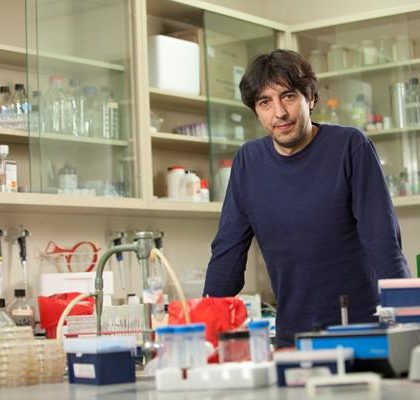
What to know about fasting, aging, the “longevity diet” and when you should eat
Biochemist Valter Longo has devoted decades to discovering connections between nutrition and successful aging. He runs the Longevity Institute at the USC Leonard Davis School of Gerontology, which aims to extend healthy …
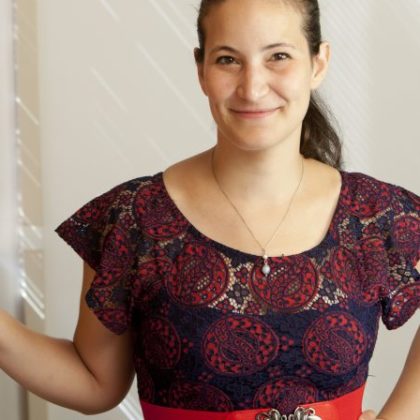
Bérénice Benayoun studies possibility of rejuvenating genes
Bérénice Benayoun, assistant professor at the USC Leonard Davis School of Gerontology and principal investigator with USC Stem Cell, explores the role of epigenetics—the ways that genes turn “off” or “on”—in the …
New cellular approach found to control progression of chronic kidney disease
Researchers have demonstrated for the first time that extracellular vesicles—tiny protein-filled structures—isolated from amniotic fluid stem cells (AFSCs) can be used to effectively slow the progression of kidney damage in mice with …
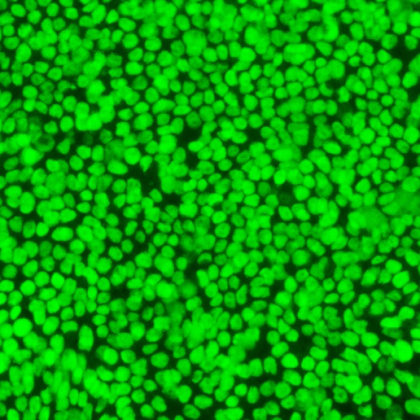
Subtle cues can dictate the fate of stem cells
If you’ve seen one GSK3 molecule, do not assume that you have seen them all. A new study in Developmental Cell reveals important differences in two similar forms of GSK3, which, in …
Pinchas Cohen recognized as top influencer in aging field
A newly published list of 2017’s top 50 “Influencers in Aging” includes Pinchas Cohen, dean of the USC Leonard Davis School of Gerontology and principal investigator with USC Stem Cell. The list …
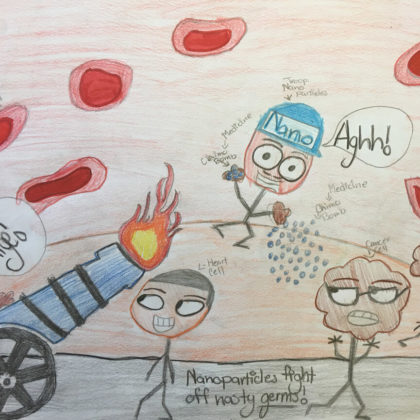
Peeking into the science world
For adolescents, social media use is nearly inevitable. According to “Science Daily,” a website that circulates recently developed research news headlines, 76 percent of teenagers in the United States actively use Instagram …
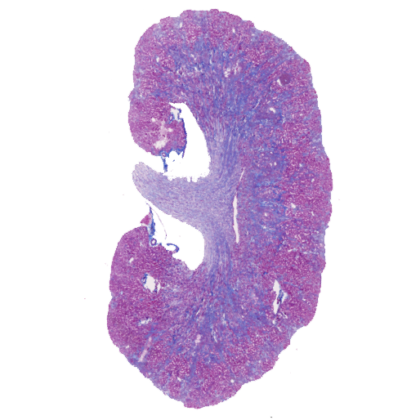
The Broad Foundation awards $1 million to early-stage stem cell research projects
The Eli and Edythe Broad Foundation has awarded two $125,000 grants to early-stage scientific investigations at USC’s stem cell research center. The projects are among eight winners of the $1 million Fund …
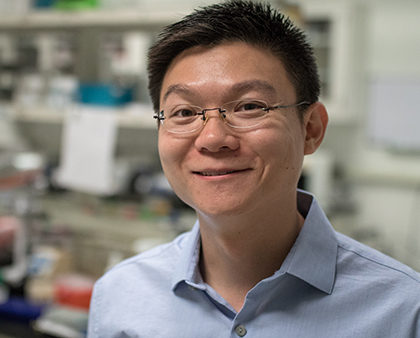
USC Stem Cell scientist Zhongwei Li is writing a recipe for a kidney
USC Stem Cell scientist Zhongwei Li could have gone into the family restaurant business. Instead, he’s dedicated his career to experimenting with a very different set of ingredients: kidney stem cells. “The …
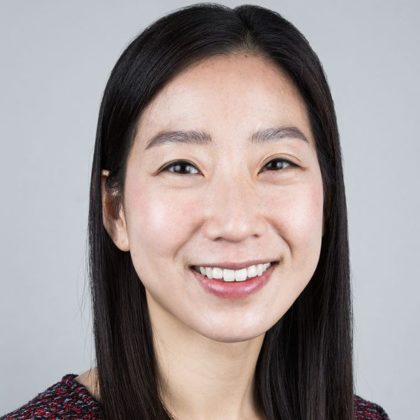
Eun Ji Chung receives 2017 AIChE 35 Under 35 Award
To describe Eun Ji Chung as “goal-oriented” might be the understatement of the year. Chung, a Gabilan Assistant Professor in the USC Viterbi Department of Biomedical Engineering and USC Stem Cell principal investigator, …
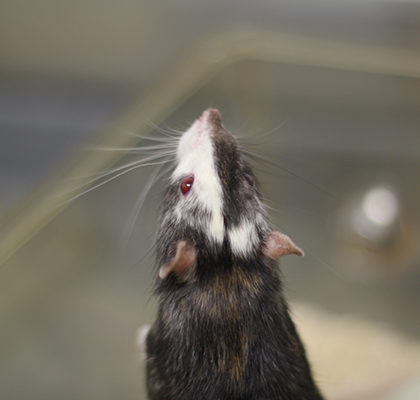
USC Stem Cell researchers receive $3 million of NIH funding to produce sophisticated laboratory rats
USC Stem Cell principal investigator Qi-Long Ying and his team are pleased to introduce a new transgenic animal—the conditional and inducible gene knockout rat. Created using embryonic stem cell-based technology, these remarkable …
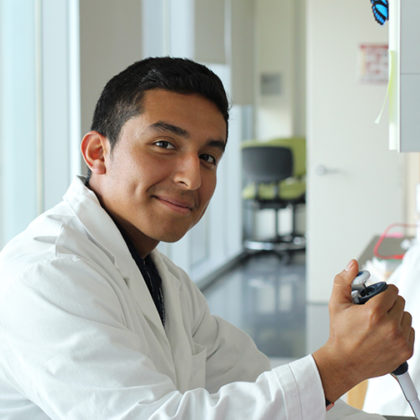
High school student Richard Lopez gets an early start with stem cell science
Even though Richard Lopez is still in high school, he can already tell you a thing or two about the ureteric bud, the metanephric mesenchyme and the developing kidney. More impressively, he …
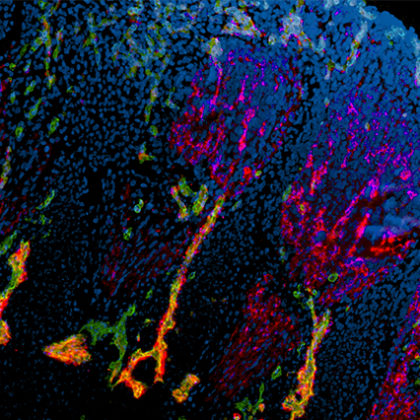
Whittier Foundation backs new group of research projects
The L.K. Whittier Foundation has been a critical source of funding for cancer research at the Keck School of Medicine of USC and the USC Norris Comprehensive Cancer Center, supporting clinicians and …
Broad Clinical Research Fellows strive to regenerate lymph nodes, liver and kidney
The lymph nodes, liver and kidney are not passive filters for toxins, but complex organ systems that perform an astonishing array of critical functions. To help patients who have suffered damage to …
NIH funding helps Americans live longer and healthier
The nation’s medical research agency, the National Institutes of Health, funds research to help Americans live longer and healthier. Some 148 Nobel Prize winners have received support from the NIH, demonstrating how …
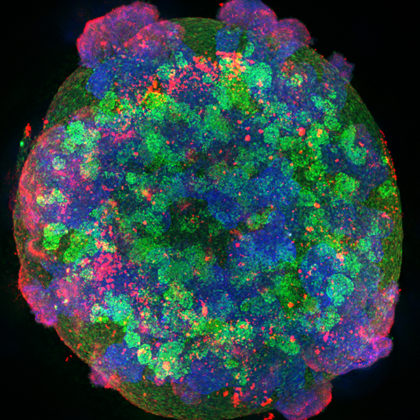
USC’s stem cell scientists secure the dollars to fight disease
The price of progress is not only the energy and talent of stem cell scientists, but also the research dollars that support their discoveries. In recent months, faculty members have secured numerous …
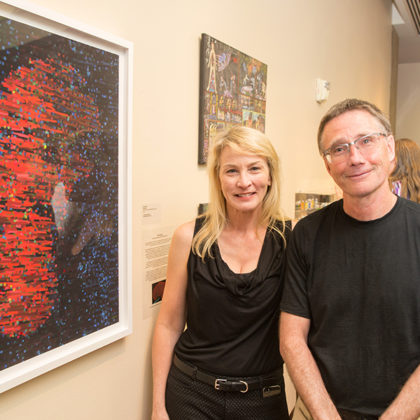
Artist plus researcher equals infinite inspiration at the Keck School of Medicine of USC
What happens when you pair 14 artists with 14 USC biomedical researchers? The answer is currently on display at the Hoyt Gallery on the Health Sciences Campus of the Keck School of …

Megan McCain appointed to Chonette Early Career Chair
Megan McCain, assistant professor of biomedical engineering, and stem cell biology and regenerative medicine, has been honored with the Chonette Early Career Chair at the USC Viterbi School of Engineering. As an …
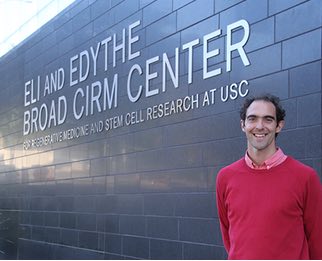
From professional volleyball to stem cell biology, Leonardo Morsut is at the top of his game
For USC Stem Cell researcher Leonardo Morsut, the word “set” refers to a collection of scientific data. “Set” is also the prelude to spiking a volleyball over the net—something he used to do for a living as a professional athlete in Italy.