
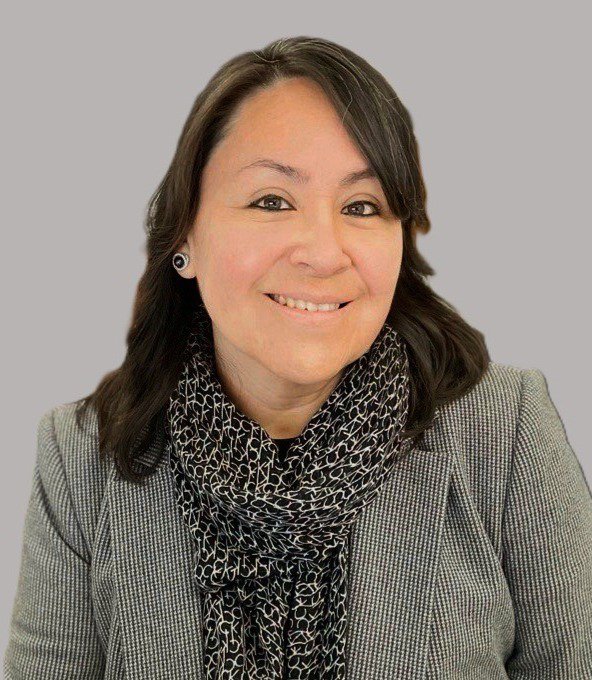
As the Senior Manager of Digital and Data Analytics at Takeda in Los Angeles, Vivian Medina pursues her career in science with the ultimate goal of helping people.
A lifelong Angeleno whose parents were born in Guatemala, Medina attended Lincoln High School near USC’s Health Sciences Campus. The first person in her family to attend college, she majored in biochemistry and did a post-baccalaureate program focused on reproductive research at California State University, Los Angeles.
“My goal was to help people in some way,” she said. “I thought I would be a medical doctor going into college. It was actually an undergrad chemistry professor who said to me, ‘You can make an impact on more people if you look into sciences.’ And so that’s what got me going on a PhD track. For my research, I always wanted to focus on therapeutic research that could help chronic devastating diseases, particularly diabetes and cancer.”
Having family affected by type 1 diabetes, Medina was drawn to join the stem cell lab of Bangyan Stiles, who studies diabetes as well as liver disease and cancer at the USC Mann School of Pharmacy and Pharmaceutical Sciences. In the Stiles Lab, Medina completed her PhD in systems biology and disease through the Programs in Biomedical and Biological Sciences (PIBBS) at the Keck School of Medicine of USC, as well as her postdoctoral training.
“Bangyan Stiles had a diabetes model that I was really interested in, as well as cancer mouse models,” said Medina. “I got my PhD looking into the Pten-null liver cancer model and trying to find therapies for it, and it ended up working out. It was always connecting disease with potential therapy in an animal model that was really interesting to me, and what drew me to her lab in the first place.”
A California Institute for Regenerative Medicine (CIRM) Scholars training grant funded part of Medina’s PhD and postdoctoral studies.
“It was absolutely valuable not only for funding the research, but also for giving me the self-confidence, being a Latina woman in science , that I was able to earn these government grants and publish papers,” she said. “It definitely set me up for a successful career.”
After completing her postdoctoral training at USC, Medina made the leap into industry when she took a job as a lab manager at a Los Angeles-based division of Baxter, which was later acquired by Takeda Pharmaceuticals.
“I wanted to hold on to that helping people aspect, and I thought I could do that out in the pharmaceutical world as well,” she said. “My journey at USC did help establish those very core skills such as understanding basic research, and running lab projects to be able to transition into the pharmaceutical industry. Even though here at Takeda, we manufacture plasma-based protein therapies, the science translates.”
Medina then transitioned to a role as a laboratory scientist, before getting more involved in the business side of supporting Continued Process Verification (CPV) for products manufactured at the Takeda Los Angeles facility as Senior Manager of Digital and Data Analytics.
One of her favorite projects is partnering with the California Department of Public Health (CDPH) to manufacture a pro bono drug called BabyBIG to treat infant botulism.
“That really changed my life, because my whole goal was to help people,” she said. “So that was my first experience actually manufacturing a product for patients. The principles of science still apply, and certainly all of the preparation in grad school helped me here. It took me away from the lab bench, but in a way, I just went to the bigger bench to produce the therapy for patients.”
She added: “It makes us feel good to know that we’re doing it for the community, because this orphan drug only has about 150 cases per year. Therefore, no company would do this for profit. Yet those infant patients are key: they need that medication. If any infant case demonstrates botulism symptoms, CDPH will get notified and they can get that therapy that we produce. And so it’s great to be able to give back that way as well.”
She’s also enjoyed working on a tech transfer for a drug for hereditary angioedema, a disease that causes painful attacks of localized swelling usually affecting the face, extremities, abdomen and urogenital area.
After 13 years at Takeda, Medina appreciates that the company continues to allow her to grow and explore her interests in both science and business, while remaining rooted in her Los Angeles family and community.
“I have roots here,” she said. “Especially as I have two girls, 10 and 14. It’s important to be close to my parents and siblings who have helped me raise my girls throughout my career.
With her family, she enjoys cooking—she finds reading a recipe surprisingly similar to following a scientific protocol—and taking quick trips to local destinations, including Catalina Island, Solvang, Arrowhead and Big Bear.
She pays forward her success to the current generation of students by attending recruitment events at her alma maters of California State University, Los Angeles and USC. Thanks to her personal outreach, Takeda has made hires of graduates from both universities.
She’s also still engaged in the intellectual life at USC, where her mentor Bangyan Stiles recently resurrected one of Medina’s seemingly “failed” projects.
“I recently reconnected with Bangyan, my PI, and she showed me my old lab notebook,” said Medina. “I had some research that we couldn’t quite make sense of at the time, but she has her new students working on it with other tools such as micro array analysis. And so even now, 20 years later, in that laboratory, we might be able to produce another paper with the students who are continuing the work. So absolutely, programs like the CIRM Scholars training grants are essential for the students not only who do the program at the time, but also who continue to give back to the science community, either in referencing the research, or possibly in providing new topics that will later be discovered and elucidated.”
She added: “Those of us who received those grants, many years later, are still trying to make a difference. So I hope that the program continues for the students of this generation.”